-

Fines and fees: Consequences and opportunities for reform
The use of fines and fees to directly fund courts, law enforcement agencies, or other government activities can result in undesirable conflicts of interest.
-

Grading every state’s telehealth laws
While many state telehealth laws changed during the COVID-19 pandemic, some of those reforms have expired and many best practices that would improve health care and help patients still need to be implemented.
-

The effects of cash bail on crime and court appearances
Research suggests that curtailing the use of monetary release conditions among low-risk defendants would not result in dramatic drops in court attendance or increased risk of reoffending.
-

From prison to paperwork: A 50-state survey of policies on reentry identification documents
State correctional agencies can facilitate the reentry process by assisting inmates with obtaining essential identification documents prior to release.
-

Rating states on telehealth best practices
This toolkit aims to help policymakers move towards quality-oriented, affordable, and innovative health systems by ensuring that their state telehealth laws remove barriers that prevent access to care.
-

Defined Benefit Plans: Best Practices in Incorporating Risk Sharing
Public pension risk sharing can increase plan solvency, provide better accountability, and lessen the burden that unfunded liabilities have on taxpayers.
-

Best practices in hybrid retirement plan design
The recent shift toward offering hybrid plans to newly hired government employees suggests that governmental employers may be changing their perceptions of the balance of financial risk between employees and employers.
-
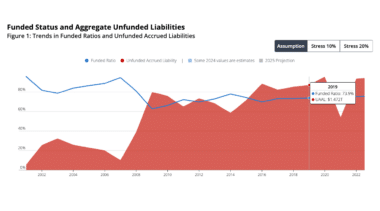
Annual pension solvency and performance report
At the end of the 2023 fiscal year, the nation's public pension systems had $1.59 trillion in total unfunded liabilities.
-
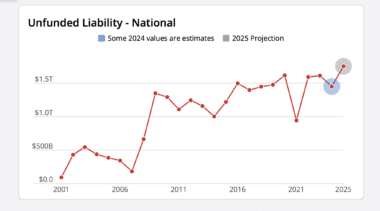
Report: State and local pension plans have $1.48 trillion in debt
State pension systems have $1.29 trillion in unfunded liabilities, and local governments have $187 billion.
-

Consumer Surplus in the FDA’s Tobacco Regulations
The forthcoming cost-benefit analyses of the FDA’s proposals for nicotine reduction in tobacco and for banning flavors in e-cigarettes must follow standard economic methodology and not assume away part of the consumer surplus.
-
Public Health Models and Related Government Interventions: A Primer
What are the main concepts and models of public health? To which extent do public health considerations require government intervention?
-

Best Practices for Providing Education Funding for Economically Disadvantaged Students
This report examines federal education funding for student poverty and how state education finance systems can best fund students.
-

A legislative template for a modernized public sector defined contribution plan
This legislative template offers a policy-based plan design that synthesizes the best aspects of both defined benefit and defined contribution models.
-

The Gold Standard In Public Retirement System Design Series
Best practices and recommendations to help states move into a more sustainable public pension model for employees and taxpayers.
-

Modernizing Florida retirement: Analyzing recent reform concepts
Comprehensive reform to the Florida Retirement System could protect taxpayers and offer employees a secure retirement.
-

10 Best Practices For State Automated Vehicle Policy
This policy brief offers 10 policy recommendations for state policymakers to promote automated vehicle innovation while protecting the public interest.
-

Challenges and Opportunities for Federal Automated Vehicle Policy
This policy brief aims to provide guidance to federal policymakers as they work to develop a pro-innovation national framework for automated vehicles.
-

Pathways and policy for 21st-century freight rail
The successful development and deployment of automation technologies in the future is key to ensuring freight rail’s ongoing success.