-

Refocusing U.S. welfare policy on economic opportunity
This study examines how the welfare system and banking, housing, criminal justice, and labor market regulations reduce and undermine opportunities for low-income Americans.
-

An overview of Mississippi’s open enrollment policies
Mississippi gets a grade of "F" in Reason Foundation's report evaluating each state’s open enrollment laws in seven critical areas.
-

An overview of Missouri’s open enrollment policies
Missouri gets a grade of "F" in Reason Foundation's report evaluating each state’s open enrollment laws in seven critical areas.
-

An overview of Ohio’s open enrollment policies
Ohio gets a grade of "F" in Reason Foundation's report evaluating each state’s open enrollment laws in seven critical areas.
-

Frequently asked questions on public school open enrollment
Public school open enrollment policies allow students to transfer to the public school of their choice.
-

Public schools without boundaries 2022: Ranking every state’s open enrollment laws
Only 11 states have mandatory open enrollment laws that allow students to easily transfer to other public schools and 26 states allow public schools to charge tuition to public school transfer students.
-
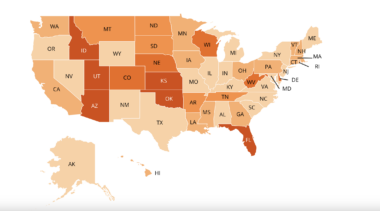
Public schools without boundaries 2023: Ranking every state’s open enrollment laws
Six states, including Arizona and Florida, have implemented four out of five best practices for public school open enrollment, but 34 states have implemented one or none.
-
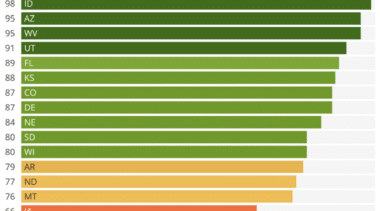
Public schools without boundaries 2024: Ranking every state’s open enrollment laws
Study finds Arizona, Idaho, Oklahoma, Utah, and West Virginia have the best public school transfer and open enrollment laws.
-
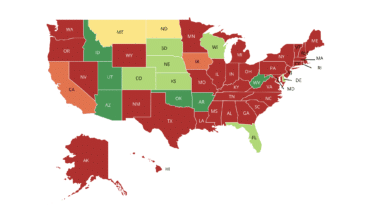
Public schools without boundaries 2025: Ranking every state’s open enrollment laws
Study finds 16 states have statewide cross-district open enrollment and 17 states have statewide within-district open enrollment.
-

Transparent K-12 open enrollment data matters to parents, policymakers and taxpayers
A total of 16 states have strong statewide cross-district open enrollment laws, while 13 states have strong statewide within-district open enrollment laws.
-

K-12 open enrollment by the numbers: 2025
Approximately 1.6 million students across 19 states use some form of open enrollment or public school transfer law to attend schools that are the right fit.
-

Federal law unconstitutionally prohibits medical marijuana users from possessing firearms
To prevent violations of the Second and Fifth Amendments, Congress should amend the Gun Control Act of 1968 to permit an exception for legal medical marijuana use.
-

Examining excess deaths, years of lives lost, and other health consequences during the COVID-19 pandemic
"The non-COVID death toll that has accompanied the pandemic is large, well into six digits."
-

What Kratom and delta-8 THC illustrate about substance regulation and criminalization
Substances like delta-8 and kratom are new entrants into what has become an “underground” market for “legal” buzzes and highs.
-

State policy agenda for telehealth innovation
This report examines all 50 states in four key areas where there's an opportunity to maximize the potential of telehealth services.
-

How Connecticut’s pre-K endowment raises pension costs
Connecticut remains the second most indebted state in the nation on a per-capita basis, leaving little margin for deviation from its commitment to debt reduction.
-

Fiduciary principles need to be reaffirmed and strengthened in public pension plans
"The exclusive purpose of investing pension assets must be to provide pension benefits and defray reasonable expenses—nothing else."
-

Is private equity a public financial hazard?
Private equity funds lack clear return and risk metrics, making it hard to assess performance before investments are redeemed, often a decade or more after the initial investment.