Mariana Trujillo
Managing Director, Government Finance, Reason Foundation
Mariana Trujillo is managing director of government finance at Reason Foundation.
She holds a B.A. in economics from George Mason University. Before joining Reason Foundation, she interned at JP Morgan, The Mercatus Center, and The Cato Institute.
Trujillo’s research focuses on the fiscal health of federal, state, and local governments, particularly the impact of pension liabilities on fiscal condition and the effect of retirement benefits on public-employee recruitment and retention. Her work has appeared in outlets such as Reason magazine, the San Diego Tribune, Hartford Courant, Los Angeles Daily News, CQ Researcher, and more. She has also testified on these issues before the Oklahoma House of Representatives and the Connecticut General Assembly.
-

Model legislation for audit requirements for opioid settlement fund recipients
Reason Foundation’s new model legislation extends the single audit framework to opioid settlement fund recipients at the state level.
-

States should prioritize private service providers for the opioid settlement funds
By outsourcing service delivery, these funds can stimulate the growth of for-profit and nonprofit organizations that can outlive the settlement.
-

Pension Reform News: How state public pension systems rank on key health metrics
Plus: Crucial pension reforms under fire in California, Oklahoma bill advances retirement goals of government employees, and more.
-
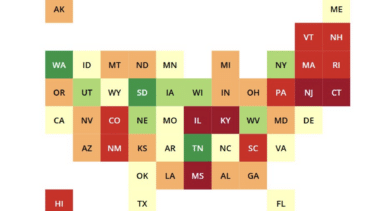
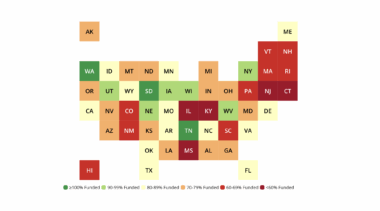
How every state’s public pension system ranks
Tennessee, Virginia, and Washington lead the nation with fully funded systems, while Illinois, Kentucky, and New Jersey remain at the bottom with the deepest shortfalls.
-
Pension Reform News: Rules on how public pensions should invest in crypto
Plus: Alaska could take on billions in extra costs by rolling back reforms, unfunded public pension liabilities are a debt, and more.
-
Frequently asked questions about public pensions investing in Bitcoin and other digital assets
Are public pension systems investing in digital assets effectively gambling with taxpayer-backed retirement assets?
-
U.S. public pension and trust fund investment in digital assets
Policy considerations for public sector investment in Bitcoin and other cryptocurrencies.
-
How the proposed billionaire tax would backfire and hurt California
While taxing billionaires may feel cathartic to some, it’s neither a smart nor a sustainable solution to California’s debt and deficits.
-
Pension Reform News: Public pension reform drives fiscal responsibility, not inequality
Plus: How property tax cuts will impact pensions in Texas, Louisiana's pension crisis threatens taxpayers, and more.
-
Public pension reform does not increase inequality
Well-designed pension reform is essential to safeguarding public services, protecting taxpayers, and ensuring sustainable retirement security.
-
San Diego’s government needs more competition, not more taxes
San Diego’s rising pension costs and mounting long-term debt are creating significant budget pressures that have city officials turning to tax and fee increases.
-
State and local governments are drowning in debt
To address this mountain of debt and restore fiscal stability, state and local governments must sustainably align spending with revenues.
-
Connecticut’s pensions shouldn’t make political investment in WNBA team
Keeping the Connecticut Sun in the state may be good politics, but would be an unwise financial move that puts the state's taxpayers at risk.
-
Most public pension contributions go toward paying off debt, not funding benefits
Over 50% of the public pension contributions by state and local governments are directed toward paying off pension debt rather than to benefits themselves.
-
Report: Cities have $1.4 trillion in debt
San Francisco, Nantucket, New York City, Ocean City, and Miami Beach are the cities with the most per capita debt.
-
Report: County governments have $757 billion in debt
In per capita terms, North Slope Borough, Alaska, ranks first, with its total debt representing $46,883 per county resident.
-
Pension Reform News: Reason’s annual report finds $1.5 trillion in aggregate pension debt
Plus: Undoing California's pension reforms could cost billions, what government worker reductions mean for pensions, and more.
-
Study: Illinois, Connecticut, Alaska, Hawaii, New Jersey and Mississippi have the most per capita pension debt
Illinois, Kentucky, New Jersey, Mississippi, and Connecticut have less than 60% of funding needed to pay for promised pension benefits.