
Baruch Feigenbaum
Senior Managing Director, Transportation Policy, Reason Foundation
Baruch Feigenbaum is senior managing director of transportation policy at Reason Foundation.
Feigenbaum has a diverse background researching and implementing transportation issues including revenue and finance, public-private partnerships, highways, transit, high-speed rail, ports, intelligent transportation systems, land use, and local policymaking. Prior to joining Reason, Feigenbaum handled transportation issues on Capitol Hill for Rep. Lynn Westmoreland.
Feigenbaum is a member of the Transportation Research Board Bus Transit Systems and Intelligent Transportation Systems Committees. He is vice president of programming for the Transportation and Research Forum Washington Chapter, a reviewer for the Journal of the American Planning Association (JAPA), and a contributor to Planetizen. He has appeared on NBC Nightly News and CNBC. His work has been featured in the Washington Post, The Wall Street Journal and numerous other publications.
Feigenbaum earned his master's degree in Transportation Planning with a focus in engineering from the Georgia Institute of Technology.
-
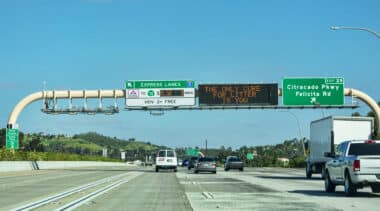
The value of managed lanes networks
Examining the express toll lanes that are currently operated, under construction, planned and warranted across the country.
-

Reining in discretionary grant transportation funding
Improving the federal discretionary grant funding process for transportation projects calls for returning it to a small, focused and useful program.
-

Annual Surface Transportation Infrastructure Report 2026
It was a strong year for global public-private partnership activity, with 50 project closings worth $30.2 billion.
-
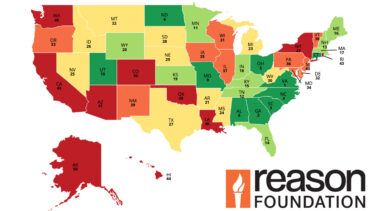
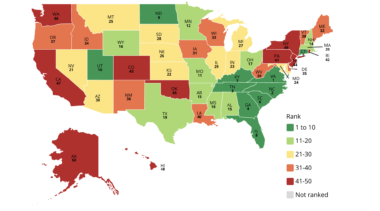
29th Annual Highway Report: Virginia and Georgia have best-performing, most cost-effective highways, while Alaska and California have worst
The study examines every state's roads and bridges in 13 categories, including traffic fatalities, pavement condition, congestion, deficient bridges, and spending.
-
29th Annual Highway Report: Summary of findings and rankings
Four of the top five states, Virginia, Georgia, North Carolina, and Ohio, rank among the 15 most populous states in the country.
-

Low tech mileage-based user fee options
Mileage-based user fees are the most promising replacement for the fuel tax, which is no longer a sustainable way to fund roads and highways.
-

Annual Surface Transportation Infrastructure Report 2025
It was a strong year for global public-private partnership activity with 43 surface transportation project closings worth $11.9 billion.
-

-
28th Annual Highway Report: Executive summary of findings and state rankings
The Annual Highway Report examines every state's road pavement and bridge conditions, traffic fatalities, congestion delays, spending per mile, administrative costs, and more.
-

Five actions transit agencies should take in the next two years
With transit ridership down, most large transit agencies will likely face a severe financial cliff in late 2024 when federal stimulus funds have been depleted.
-
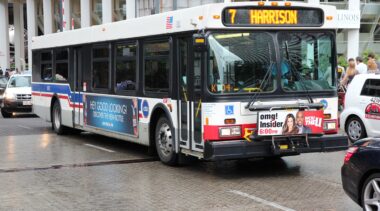
Five actions transit agencies should take immediately
U.S. transit agencies need to make a series of changes that will reform their boards, contract out service, and better serve riders.
-

Tolling rural Interstate corridors
Using tolling to refinance the reconstruction of rural highways is the most realistic option to rebuild and expand these important roadways.
-
-

The current status of Texas Central’s proposed high-speed rail line linking Dallas and Houston
The high-speed rail vision Texas Central outlined in 2013 of easy land acquisition, quick construction, minimal opposition, and low costs is vastly different from the grim reality that caused the company to abandon its project in 2022.
-

How states can implement highway public-private partnerships
With declining fuel tax revenue, growing miles traveled, and aging infrastructure, states can no longer depend on government funding for major highways.
-

Converting high occupancy vehicle lanes to high occupancy toll lanes or express toll lanes
This brief examines why and how high-occupancy vehicle lanes are converted, how much the conversions cost, and how high-occupancy toll and express toll lanes have performed.
-

How Washington state can transition from the gas tax to road usage charges
This brief suggests a policy framework for developing a road usage charge program in Washington and an implementation order that builds on systems already in place on the state’s major highways.
-

Ranking how each state’s transportation funding system aligns with the users-pay/users-benefit principle
With direct users-pay funding sources, those who use the highways are the people paying for them.