Latest
-

Funding Education Opportunity: School buses and changing transportation needs
Plus: Texas finalizes rules for new private school choice program, and states opt into federal tax-credit scholarship program.
-
Reducing taxpayers’ costs and risks in Interstate reconstruction projects
Indiana policymakers will decide if taxpayers or private companies should bear the financial risks of repairing and modernizing major highways.
-
Massachusetts bills offer a pathway toward expanded psychedelic access
Embracing the promise of psychedelic therapies like psilocybin would place Massachusetts at the forefront of this new wave of evidence-informed reform.
-
Aviation Policy News: Air traffic controller staffing and resignation claims
Plus: How air traffic control reforms are described, the costs of modernization, and more.
-
New study details how legal psychedelic services can treat depression, anxiety
A new study has found notable improvements in mental health among participants who underwent legal, supervised sessions with psychedelics in Oregon.
-
Mandating inefficiency: Minimum lot size regulation and housing
Excessive land use restrictions are a primary contributor to the ongoing housing crisis, and minimum lot size regulations are among the most pervasive.
-
California’s state and local pension plans have over $265 billion in debt
California’s public pension plans are taking on more risk than other pension systems while generating relatively poor investment return results.
-
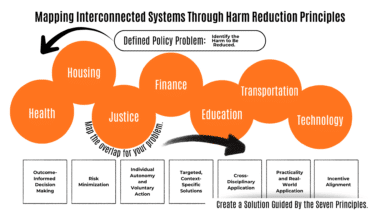
Interdisciplinary harm reduction: A practical guide
The goal is to identify where policies may be incongruent, such as through gaps in care, conflicting mandates, or fragmented accountability, and to design coordinated responses that reduce those harms without creating new ones.
-
Why teacher salaries are stagnant
That teachers’ wages have stagnated over two decades of growth in public school funding highlights deep structural problems in K–12 finance.
-
San Diego’s government needs more competition, not more taxes
San Diego’s rising pension costs and mounting long-term debt are creating significant budget pressures that have city officials turning to tax and fee increases.
-
The ROAD to Housing Act carries promise but risks bureaucratic expansion
While this approach may seem like a balanced first step, it raises important questions about how far federal agencies should go in shaping local decisions.
-
Surface Transportation News: Key Bridge replacement costs soar
Plus: Fixing the Highway Trust Fund, Spain de-tolls motorways resulting in problems, and more.
-
Why the World Health Organization’s anti-nicotine policy could keep millions smoking
If these recommendations are put in place, they could discourage millions of smokers from switching to safer alternatives.
-
What state policymakers should know about homeschoolers
For state policymakers, it is crucial to have an accurate understanding of modern homeschoolers when considering new laws or regulations.
-
Restoring robust hearing practices will protect consumers from defective aviation consumer protection regulations
The recent history of Section 41712 discretionary rulemaking suggests that regulatory analysis has not been sufficiently robust to avoid harm to consumers.
-
State and local governments are drowning in debt
To address this mountain of debt and restore fiscal stability, state and local governments must sustainably align spending with revenues.
-
Connecticut’s pensions shouldn’t make political investment in WNBA team
Keeping the Connecticut Sun in the state may be good politics, but would be an unwise financial move that puts the state's taxpayers at risk.
-
Pension Reform News: Reason analysis shows debt drives the rise in pension costs
Plus: Ohio bill would advance shared pension responsibility, Florida has decades to go before fully funding benefits, and more.