-

Medical cannabis access under probation and parole: Removing barriers to doctor-recommended treatment
Supervision systems designed to support rehabilitation and reentry should not erect barriers to medical care that is legal for all other citizens.
-
Changing America’s air traffic control model: Learning from Canada
The U.S. air traffic control system is embedded in a tax-funded bureaucracy that is unable to replace ancient facilities and obsolete technology.
-
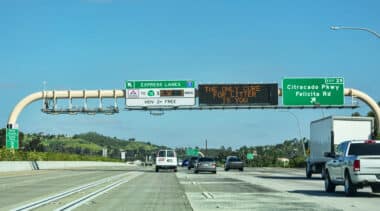
The value of managed lanes networks
Examining the express toll lanes that are currently operated, under construction, planned and warranted across the country.
-
Reining in discretionary grant transportation funding
Improving the federal discretionary grant funding process for transportation projects calls for returning it to a small, focused and useful program.
-

Improving public sector defined contribution plans to help provide secure, adequate retirement income
A framework for policymakers and fiduciaries to evaluate lifetime retirement income options in public sector defined contribution plans, mitigate longevity risk, and improve participant outcomes.
-
Out of the shadows: Tax reforms to formalize Argentina’s underground economy
Argentina's high payroll taxes and cascading levies create a tax wedge between formal and informal employment arrangements.
-
How to remove TSA’s conflict of interest
Congress should devolve checkpoint and checked-baggage screening to airports, as is common practice in Canada, Europe, and many other countries.
-
Annual Transportation Finance Report 2026
During 2025, infrastructure investors financed $92.4 billion worth of public-private infrastructure transactions, including transportation projects.
-
Annual Aviation Infrastructure Report 2026
This report reviews developments in the United States and worldwide regarding private-sector participation in airports and air traffic control.
-
Annual Surface Transportation Infrastructure Report 2026
It was a strong year for global public-private partnership activity, with 50 project closings worth $30.2 billion.
-
How Connecticut’s pre-K endowment raises pension costs
Connecticut remains the second most indebted state in the nation on a per-capita basis, leaving little margin for deviation from its commitment to debt reduction.
-
Advanced air mobility infrastructure: Considerations for state policymakers
Advanced air mobility services aim to bring small-scale aviation to the local and regional transportation markets currently dominated by automobiles.
-
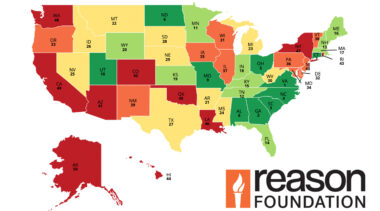
29th Annual Highway Report: Virginia and Georgia have best-performing, most cost-effective highways, while Alaska and California have worst
The study examines every state's roads and bridges in 13 categories, including traffic fatalities, pavement condition, congestion, deficient bridges, and spending.
-
29th Annual Highway Report: Summary of findings and rankings
Four of the top five states, Virginia, Georgia, North Carolina, and Ohio, rank among the 15 most populous states in the country.
-
From prison to paperwork: A 50-state survey of policies on reentry identification documents
State correctional agencies can facilitate the reentry process by assisting inmates with obtaining essential identification documents prior to release.
-
Frequently asked questions about public pensions investing in Bitcoin and other digital assets
Are public pension systems investing in digital assets effectively gambling with taxpayer-backed retirement assets?
-
U.S. public pension and trust fund investment in digital assets
Policy considerations for public sector investment in Bitcoin and other cryptocurrencies.
-
Staffing surges and student outcomes: Rethinking unions, resource allocation, and school choice in American education
Despite declining student enrollment in many U.S. school districts, K-12 education spending and staffing have grown substantially over the past two decades.