
Marc Scribner
Senior Transportation Policy Analyst, Reason Foundation
Marc Scribner is a Senior Transportation Policy Analyst at Reason Foundation.
Scribner's work focuses on a variety of public policy issues related to transportation, land use, and urban growth, including infrastructure investment and operations, transportation safety and security, risk and regulation, privatization and public finance, urban redevelopment and property rights, and emerging transportation technologies such as automated road vehicles and unmanned aircraft systems. He frequently advises policymakers on these matters at the federal, state, and local levels.
Scribner has testified numerous times before Congress at the invitation of both Democrats and Republicans on issues including highway revenue collection, traffic congestion management, public transit productivity, freight rail regulation, airport financing, and air traffic control modernization. He is a member of the Transportation Research Board’s Standing Committee on Developments and Advancements in Transportation Technology Law.
He has appeared on television and radio programs in outlets such as Fox Business Network, National Public Radio, and the Canadian Broadcasting Corporation, and has also written for numerous publications, including USA Today, The Washington Post, Wired, CNN.com, MSNBC.com, Forbes, and National Review. And his work has been featured by The Wall Street Journal, New York Times, Washington Post, Los Angeles Times, Scientific American, Congressional Quarterly, Washington Monthly, POLITICO, CNN, Bloomberg, BBC, C-SPAN, and other print, television, and radio outlets.
Scribner joined Reason Foundation after more than a decade at the Competitive Enterprise Institute, where he was a senior fellow in transportation policy. He received his undergraduate degree in economics and philosophy from George Washington University.
-
U.S. air travelers would benefit from more airline deregulation, not re-regulation
Policymakers are facing renewed pressure from misguided activists and special interests to resurrect the failed policies of the past.
-

California needs to revise transit plans for today’s work and travel patterns
Instead of eliminating fares, California's leaders should focus on improving service for those most dependent on transit to meet their daily needs.
-

Protecting customer privacy in mileage-based user fee systems
By incorporating privacy protections at the beginning of technology development along with strict legal requirements on data handling, privacy concerns can be addressed.
-
U.S. Department of Transportation regulatory pipeline slowed in the second half of 2022
The latest transportation department update had the fewest number of new rulemaking projects since the beginning of the Biden administration.
-
No evidence to support train crew size regulation
Reason Foundation comments on the Federal Railroad Administration's proposed rule on the minimum size of train crews.
-
How to build on the success of past railroad deregulation
Congress can protect the gains realized from the Staggers Act and help usher in 21st-century freight rail.
-

Reforming the Department of Transportation’s aviation consumer protection authority
DOT increasingly uses its authority to protect consumers from unfair practices to chip away at airline deregulation.
-
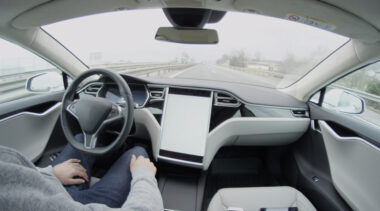
Webinar: The impacts of autonomous vehicle technology and role of public policy
Watch this video featuring Reason Foundation, Brookings Institution, and Princeton Autonomous Vehicle Engineering on the future technological, socio-economic and public policy impacts of autonomous vehicles.
-
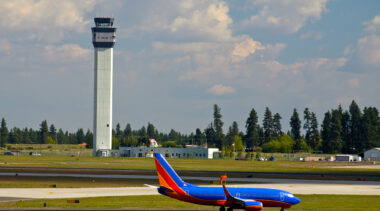
Reforming the Airport Investment Partnership Program
Privatization could bring needed improvements to U.S. airports while containing costs and shifting fiscal risks away from taxpayers.
-

A simple way to increase competition and reduce airfares in the US
Congress should consider relaxing the prohibition on airline cabotage and build on the success of domestic airline deregulation.
-

What Congress needs to know about drone airspace integration
Congress should pay close attention to ongoing activities in the drone industry and at FAA.
-
New regulatory burdens for the transportation sector from the Biden administration
The current volume of regulatory activity at the U.S. Department of Transportation is typical of what has been seen over the past two administrations.
-

Examining the increase in traffic fatalities and surge in dangerous driving
This troubling upward trend in dangerous driving during the COVID-19 pandemic must be analyzed to better understand the causes and evaluate the effectiveness of potential safety countermeasures.
-

-

As more states legalize marijuana, the Department of Transportation looks to change drug testing policies
Drug tests for marijuana use continue to reflect a bygone zero-tolerance approach and fail to reliably detect on-duty use and intoxication.
-

The real danger of mandatory reciprocal switching is freight rail stagnation
The Surface Transportation Board should not amend its reciprocal switching regulations until it can credibly show that the benefits would exceed the costs.
-

Recalibrating expectations for the true potential of automated vehicles
We will be dealing with a large amount of uncertainty about both AV technology and policy for some time.
-

Arizona’s kids need expanded transportation options to get to the schools of their choice
Some of Arizona’s highest-quality schools are unable to offer student transportation thanks to outdated state laws.