
Marc Scribner
Senior Transportation Policy Analyst, Reason Foundation
Marc Scribner is a Senior Transportation Policy Analyst at Reason Foundation.
Scribner's work focuses on a variety of public policy issues related to transportation, land use, and urban growth, including infrastructure investment and operations, transportation safety and security, risk and regulation, privatization and public finance, urban redevelopment and property rights, and emerging transportation technologies such as automated road vehicles and unmanned aircraft systems. He frequently advises policymakers on these matters at the federal, state, and local levels.
Scribner has testified numerous times before Congress at the invitation of both Democrats and Republicans on issues including highway revenue collection, traffic congestion management, public transit productivity, freight rail regulation, airport financing, and air traffic control modernization. He is a member of the Transportation Research Board’s Standing Committee on Developments and Advancements in Transportation Technology Law.
He has appeared on television and radio programs in outlets such as Fox Business Network, National Public Radio, and the Canadian Broadcasting Corporation, and has also written for numerous publications, including USA Today, The Washington Post, Wired, CNN.com, MSNBC.com, Forbes, and National Review. And his work has been featured by The Wall Street Journal, New York Times, Washington Post, Los Angeles Times, Scientific American, Congressional Quarterly, Washington Monthly, POLITICO, CNN, Bloomberg, BBC, C-SPAN, and other print, television, and radio outlets.
Scribner joined Reason Foundation after more than a decade at the Competitive Enterprise Institute, where he was a senior fellow in transportation policy. He received his undergraduate degree in economics and philosophy from George Washington University.
-

Policy discussions around rail safety regulation should consider the role of standards
Any proposed safety regulation should address an identified market failure and avoid short-circuiting the continual evolution of safety-enhancing technologies, standards, and operating practices.
-

Regulatory agenda may offer glimpse into a potential Harris administration’s transportation automation policy
It's possible Vice President Kamala Harris' close ties to Silicon Valley could lead her potential administration to adopt a more positive and forward-looking view on transportation automation.
-

Mandatory reciprocal switching won’t enhance transportation competition
Mandatory reciprocal switching “will lead to decreased network velocity, diminished capital investments into the freight rail network, and deteriorating rail intermodal service levels.”
-

Takeaways from the NTSB’s final report on the East Palestine derailment
The agency’s findings suggest that a major legislative response from Congress is not needed to advance rail safety.
-

-

How to reduce the cost of replacing Baltimore’s Key Bridge
Congress should waive costly federal regulations to help ensure that taxpayer dollars are not wasted and construction is completed in a timely fashion.
-

California considers more regulatory roadblocks for automated vehicles
California’s increasingly hostile regulatory and business climate has already caused several autonomous vehicle developers to move testing and planned deployments to other states.
-

An outdated federal law prevents transit automation
Unless the federal law known as Section 13(c) is repealed, U.S. transit agencies will struggle to implement automation and reduce expenses.
-

Federal independent contractor regulation threatens the gig economy
If gig workers lose the independence and flexibility that makes such work attractive to them, this vibrant and growing sector of the economy may shrink or even die out.
-
Department of Transportation’s ‘Buy America’ regulatory agenda increases highway construction costs
The Fall 2023 Unified Agenda lists 241 active rulemaking projects at the U.S. Department of Transportation, including 21 new projects.
-

Re-regulating airlines won’t help air travelers
Here are three reforms to target existing barriers that dampen competition in the airline industry and reduce consumer welfare.
-

Congressional hearing highlights need for gas tax replacement
The Highway Trust Fund is on the verge of insolvency and Congress needs to get back to the user-pays principle.
-
Preliminary evidence on the safety of automated vehicles is overwhelmingly positive
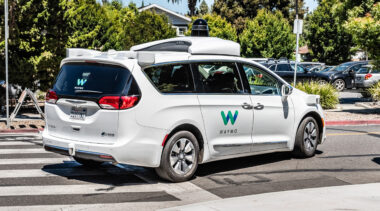
As robotaxis expand, early results indicate that Waymo’s automated vehicles are almost certainly safer than typical human drivers.
-

Surface Transportation Board signals revival of heavy-handed freight rail regulation
The STB should review the history of unintended consequences of railroad regulation and avoid repeating the mistakes of the past.
-

California seems poised to ban driverless trucks
The bill would cement California as the nation's most burdensome regulatory environment and deny Californians the safety and mobility benefits these technologies can bring.
-

Spring 2023 Unified Agenda shows increase in federal transportation regulatory activity
The Spring 2023 Unified Agenda lists 235 active rulemaking projects at the U.S. Department of Transportation. Of those 235, 24 are new rulemaking projects.
-

Improved drug-testing rules should reduce false positives, helping workers and the transportation industry
With marijuana being increasingly legalized at the state level, the workforce impacts of outdated drug-testing practices are a growing concern.
-
The Senate’s Railway Safety Act won’t improve rail safety
This is a sloppily written piece of legislation that is destined to fail to achieve its stated goal of improving safety.