Latest
-

Aviation Policy News: Superior Landing System, Supersonic Planes, and More
Plus: Paying for air traffic control, progress on runway slots, and more.
-
As Schools Lose Students, They Shouldn’t Spend Stimulus Money on New Staff Positions
School districts, like LAUSD, should be looking at ways to spend these dollars to help students catch up without creating a fiscal cliff.
-
Are Express Toll Lanes Equitable?
Study finds "lower-income drivers benefit more than higher-income drivers" per trip in variably-priced toll lanes.
-
The Fire Alliance Model for Emergency Medical Services Removes Accountability and Competition
The alliance model has negative short- and long-term implications for citizens.
-
COVID-19 Response Shows How America’s Physician Shortage Can Be Addressed
The aging US population is expected to result in a growing shortage of physicians over the coming years.
-
Annual Privatization Report 2021 — Transportation Finance
This report reviews developments in infrastructure investment and major public-private partnership projects worldwide.
-
Annual Privatization Report 2021
The year's news and trends in public-private partnerships, private sector investment and management of highways, airports, and more.
-
Annual Privatization Report 2021 — Surface Transportation
This report examines recent trends and developments in public-private partnerships for surface transportation projects.
-
California Bill Would Reduce Competition and Quality of Emergency Medical Services Provided
California bill would eliminate any need for a competitive bidding process for ambulance services and threaten the quality of the EMS services that citizens rely upon.
-
Surface Transportation News: President Biden’s Jobs Plan, New Transportation Finance and Public-Private Partnership Reports
New reports show why U.S. lags in infrastructure finance and public private partnerships, prospects for autonomous vehicle legislation in Congress, and more.
-
Maine Should Learn From Massachusetts’ Failed Flavored Tobacco Ban
"A law that increases youth smoking could pose a threat to public health."
-
Addressing America’s Aging Population and Long-Term Health Care Crisis
Regulatory reforms could expand the supply of home-health providers, unlock the potential of technological innovation, and better leverage the role of home-health workers.
-
Annuity Offerings Can Help Improve Michigan’s Defined Contribution Retirement Plans
Proposed legislation in Michigan would bring the state's defined contribution retirement plans more in line with industry best practices by offering annuities.
-
New York Proposal Would End Some Government Fines and Fees That Trap People In Criminal Justice System
Unnecessary fines and fees criminalize poverty and create bad incentives in the criminal justice system.
-
Examining the Senate’s Bipartisan Surface Transportation Bill
The biggest unanswered question remains: how will it be paid for?
-
Remembering David Hartgen
The former professor and policy analyst made a major impact on the transportation world.
-
Pension Reform Newsletter: Texas Legislature Approves Pension Reform, Retirement Choice in South Carolina, and More
Plus: Colorado and Arizona consider extra debt payments and Michigan looks to expand public employees' ability to purchase annuities.
-
How State Pension Funding Ratios Have Declined Over Time
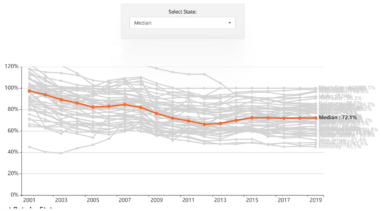
Twenty years ago, state pension plans were nearly 100 percent funded, on average. Today they are roughly 72 percent funded.