Robert Poole
Director of Transportation Policy, Reason Foundation
Robert Poole is director of transportation policy and Searle Freedom Trust Transportation Fellow at Reason Foundation.
Poole, an MIT-trained engineer, has advised multiple presidential administrations and transportation departments on infrastructure issues.
Surface Transportation
In the field of surface transportation, Poole has advised the Federal Highway Administration, the Federal Transit Administration, the White House Office of Policy Development, National Economic Council, Government Accountability Office, and state Departments of Transportation in numerous states.
Poole's 1988 policy paper proposing privately financed toll lanes to relieve congestion directly inspired California's landmark private tollway law (AB 680), which authorized four pilot toll projects including the successful 91 Express Lanes in Orange County. More than 20 other states and the federal government have since enacted similar public-private partnership legislation. In 1993, Poole oversaw a study that coined the term HOT (high-occupancy toll) Lanes, a term which has become widely accepted since.
California Gov. Pete Wilson appointed Poole to the California's Commission on Transportation Investment and he also served on the Caltrans Privatization Advisory Steering Committee, where he helped oversee the implementation of AB 680.
From 2003 to 2005, he was a member of the Transportation Research Board's special committee on the long-term viability of the fuel tax for highway finance. In 2008 he served as a member of the Texas Study Committee on Private Participation in Toll Roads, appointed by Gov. Rick Perry. In 2009, he was a member of an Expert Review Panel for Washington State DOT, advising on a $1.5 billion toll mega-project. In 2010, he was a member of the transportation transition team for Florida's Governor-elect Rick Scott. He is a member of two TRB standing committees: Congestion Pricing and Managed Lanes.
Aviation
Poole is a member of the Government Accountability Office's National Aviation Studies Advisory Panel and he has testified before the House and Senate's aviation subcommittees on numerous occasions. Following the terrorist attacks of Sept. 11, 2001, Poole consulted the White House Domestic Policy Council and the leadership of the House Transportation & Infrastructure Committee.
He has also advised the Federal Aviation Administration, Office of the Secretary of Transportation, White House Office of Policy Development, National Performance Review, National Economic Council, and the National Civil Aviation Review Commission on aviation issues. Poole is a member of the Critical Infrastructure Council of the Los Angeles Economic Development Corporation and of the Air Traffic Control Association.
Poole was among the first to propose the commercialization of the U.S. air traffic control system, and his work in this field has helped shape proposals for a U.S. air traffic control corporation. A version of his corporation concept was implemented in Canada in 1996 and was more recently endorsed by several former top FAA administrators.
Poole's studies also launched a national debate on airport privatization in the United States. He advised both the FAA and local officials during the 1989-90 controversy over the proposed privatization of Albany (NY) Airport. His policy research on this issue helped inspire Congress' 1996 enactment of the Airport Privatization Pilot Program and the privatization of Indianapolis' airport management under Mayor Steve Goldsmith.
General Background
Robert Poole co-founded the Reason Foundation with Manny Klausner and Tibor Machan in 1978, and served as its president and CEO until the end of 2000.
He was a member of the Bush-Cheney transition team in 2000. Over the years, he has advised multiple presidential administrations on transportation policy.
Poole is credited as the first person to use the term "privatization" to refer to the contracting out of public services and is the author of the first-ever book on privatization, Cutting Back City Hall, published by Universe Books in 1980. He is also editor of the books Instead of Regulation: Alternatives to Federal Regulatory Agencies (Lexington Books, 1981), Defending a Free Society (Lexington Books, 1984), and Unnatural Monopolies (Lexington Books, 1985). He also co-edited the book Free Minds & Free Markets: 25 Years of Reason (Pacific Research Institute, 1993).
Poole has written hundreds of articles, papers, and policy studies on privatization and transportation issues. His popular writings have appeared in national newspapers, including The New York Times, The Wall Street Journal, USA Today, Forbes, and numerous other publications. He has also been a guest on network television programs such as Good Morning America, NBC's Nightly News, ABC's World News Tonight, and the CBS Evening News. Poole writes a monthly column on transportation issues for Public Works Financing.
Poole earned his B.S. and M.S. in mechanical engineering at the Massachusetts Institute of Technology (MIT) and did graduate work in operations research at New York University.
-

Rethinking Interstate Rest Areas
This policy brief suggests that a 21st-century Interstate system should have state-of-the-art service plazas in addition to new pavement, improved bridges, and redesigned and rebuilt interchanges in many urban areas.
-

Transportation and COVID-19: A State Guide to Policy and Priorities
What states can do amidst today's uncertainty, with a policy focus on mitigating risks to public-sector transportation operations and infrastructure investments.
-
Why Governments Should Lease Their Toll Roads
The nine states studied here would have significant net proceeds from leasing their toll road systems via long-term public-private partnerships—even after paying off outstanding tax-exempt toll road bonds.
-
Frequently Asked Questions: Why Should States Consider Leasing Their Toll Roads?
Why lease an asset? Won't toll rates go up? Isn't this a terrible time to consider leasing infrastructure?
-
Why Florida Should Shift from Gas Taxes to Per-Mile User Fees— and How to Do It
This policy brief focuses on how Florida policymakers can address the looming highway-funding problem by transitioning from per-gallon taxes to per-mile charges.
-
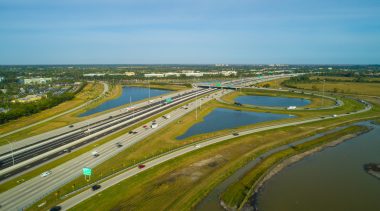
A Conservative Case for Highway Tolling
This brief explains how tolling can be designed and implemented to be consistent with basic conservative principles of limited government, decentralization, and markets.
-

How a State Could Transition From Per-Gallon Gas Taxes to Per-Mile Charges
Examining how a state-led transition from per-gallon fuel taxes to per-mile charges (MBUFs) could come about.
-
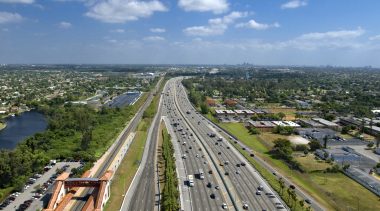
The Case for Toll-Financed Interstate Replacement
Addressing both the need to rebuild Interstates and the need to begin the transition from per-gallon fuel taxes to per-mile highway user charges.
-
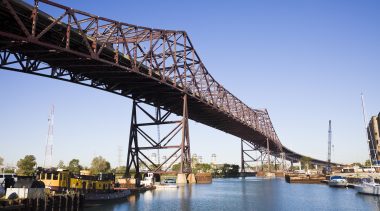
Using Asset Recycling To Rebuild America’s Infrastructure
Study finds $720 billion to $885 billion could be generated for infrastructure investment by public-private partnership leases for existing U.S. infrastructure.
-
Can Interstate Tolling Be Politically Feasible?
States can use toll revenue to modernize and update Interstate highways if the program puts the interest of highway users—motorists and truckers—first.
-
Availability Payment or Revenue-Risk Public-Private Partnership Concessions? Pros and Cons for Highway Infrastructure
While revenue-risk concessions are more advantageous and transfer more risk, a U.S. role for highway availability payment concession remains.
-
Express Transit Lanes for Toll Roads
Express bus service combined with variable pricing in a new policy framework aimed at achieving significant, sustainable reductions in congestion in both the general lanes and the inside-shoulder lane.
-

Air Traffic Control FAQs
21 Answers to Air Traffic Control Questions
-
-
Federal Barriers to Private Capital Investment in U.S. Infrastructure
Private sector can help modernize and improve our roads and bridges
-
Enhanced Transit and Managed Arterials: A Win-Win Combination
Enhanced bus is more flexible than fixed-rail transit, and can offer comparable service levels when operated either on exclusive rights of way or on virtually exclusive rights of way that are kept uncongested by variable pricing.
-
Toll Concession Public Private Partnerships: Frequently Asked Questions
Summary of popular questions designed to educate and to address misconceptions
-
Developments in Transportation Finance and Infrastructure Investment
Transportation Finance Chapter of Annual Privatization Report 2016