
Transit riders expect buses and trains to arrive on time and be safe. Yet federal transit oversight often focuses more on paperwork and procedural compliance than on service quality. As a result, agencies focus on completing paperwork such as grant reporting requirements and corrective action plan documentation instead of improving service for riders. Compliance is important, but so are operational improvements.
Current federal transit oversight focuses on enforcing and correcting rule violations. When transit agencies misuse funds, fail to meet civil rights standards, or miss key safety steps, federal regulators step in. They may require agencies to create corrective plans and keep cases open until the problems are fixed. Some of these federal interventions can lead to meaningful changes in how agencies act.
Yet service performance is treated differently. Agencies monitor reliability, travel times, and disruptions. But they don’t take any actions, such as requiring agencies to modify schedules or service levels through corrective action plans or tying future federal grant eligibility to improvements in service reliability, to fix the problem.
Supplemental transit funding during the COVID-19 pandemic years provides a good example, Between 2020 and 2021, Congress provided roughly $69.5 billion in emergency transit relief through the Coronavirus Aid, Relief, and Economic Security (CARES) Act, the Coronavirus Response and Relief Supplemental Appropriations Act of 2021 (CRRSAA), and the American Rescue Plan Act to preserve operations during a historic collapse in ridership.
Continued access to those funds depended on complying with federal spending rules such as submitting grant applications through the Federal Transit Administration’s (FTA) Transit Award Management System (TrAMS) system, certifying compliance with grant requirements, and documenting eligible operating expenses such as employee wages and benefits, fuel and power costs, and cleaning and sanitization supplies. But transit agencies were not required to improve operational performance, such as shortening passenger wait times or reducing overcrowding on buses or trains.
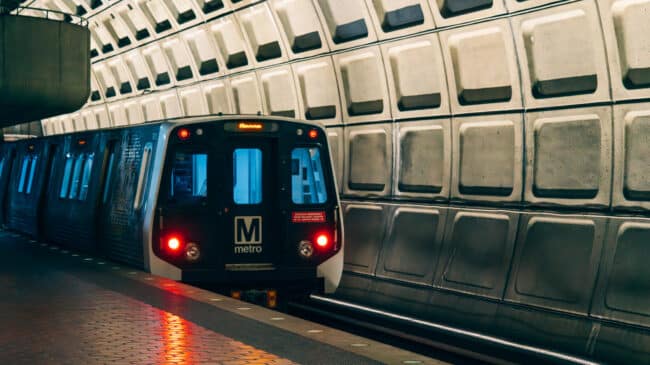
The same pattern is present in federal safety interventions. After several widely reported safety problems on Washington Metropolitan Area Transit Authority’s (WMATA) rail lines, the Federal Transit Administration (FTA) took over temporary safety oversight of the rail system in October 2015. This replaced the Tri-State Oversight Committee (TOC), which had previously regulated the agency. The FTA then issued binding safety directives requiring WMATA to implement formal safety management systems corrective action plans, and hazard-mitigation procedures. In March 2019, direct federal safety oversight ended when the Federal Transit Administration transferred oversight authority to the Washington Metrorail Safety Commission.
However, the federal safety interventions did not fix the problems. Only two years later, WMATA faced a major operational disruption when its safety regulator ordered the 7000-series railcars out of service because of wheel assembly problems. With so many trains unavailable, the agency ran fewer trains for several months, leading to longer waits and overcrowding.
The FTA’s Safety Management Inspection identified similar problems with the Massachusetts Bay Transportation Authority (MBTA) in safety governance and created special directives requiring the MBTA to improve its safety management and oversight systems, including strengthening safety reporting procedures, improving hazard identification, providing better safety training for workers, and increasing oversight of maintenance and operations. Like with WMATA, federal oversight ended once all corrective actions were finished and confirmed.
Despite the inspection, safety issues connected to the problems identified in the inspection continued to occur. For example, in July 2022, the MBTA Orange Line train caught fire while crossing the Mystic River bridge near Assembly Station in Somerville, Massachusetts. A loose metal panel hit the electrified third rail, sparking the fire and forcing about 200 passengers to evacuate onto a bridge as smoke filled the train. Some passengers broke windows to escape, and one passenger jumped into the river.
The problem is that federal agencies are primarily focused on whether transit agencies complete required compliance steps, when they should be focused on whether those systems are restoring stable, reliable operations.
Transit systems work best when state and local agencies handle governance and funding rather than relying on federal mandates and compliance systems. However, since the federal government funds transit and administers grant programs, its oversight should ensure agencies deliver reliable service, not just check off procedural boxes.
The federal government should focus on four areas:
- Define operational approval standards: Findings should remain open until agencies demonstrate consistent progress in measurable areas such as trip completion rates, passenger wait times, and crowding levels—over multiple reporting periods.
- Implement earned flexibility: Oversight requirements should decrease only after agencies demonstrate stable operations, creating clear incentives for performance recovery.
- Require operational correction when performance stalls: Agencies must implement concrete operational change, such as schedule adjustments or maintenance reforms, rather than responding solely with documentation.
- Preserve existing safeguards: Safety management, civil rights protections, and financial oversight should remain fully intact.
As long as the federal government provides transit funding, it has a role in ensuring that revenue is well spent. But federal oversight needs to focus on fixing transit systems’ most important problems, not filling out paperwork.