Yearly Archives: 2025
-

Nobel Prize winners make powerful case for optimism amid technological change
The Nobel laureates’ work puts free minds and free markets squarely at the center of how societies prosper through innovation.
-
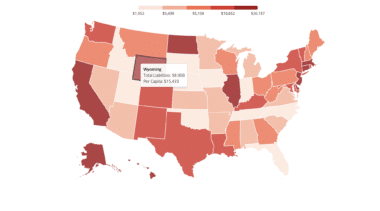
Report ranks every state’s debt, from California’s $497 billion to South Dakota’s $2 billion
Study finds state governments have a total of $2.7 trillion in debt, with 26 states exceeding $20 billion in debt each and 10 states over $70 billion.
-
Report: State and local governments have $6.1 trillion in debt
State and local debt is over $100 billion in 16 states and exceeds $50 billion in 27 states. California’s state and local governments have over $1 trillion in debt.
-
Could clearance rates be key to addressing criminal justice failures?
Clearance rates are the closest metric we have to evaluating how well the criminal justice system does at catching people who commit crimes.
-
Ohio lawmakers consider bill to promote an independent childhood
Senate Bill 277 would assure parents that they can let their children engage in safe, reasonable activities without mandated adult supervision.
-
Assembly Bill 1383 brings back major pension costs for California
The bill rolls back crucial elements of the landmark PEPRA reform, which would result in billions in extra costs imposed upon California taxpayers.
-
New York’s stalled AI bill would have blurred the line between disclosure and restriction
While pitched as a transparency measure, Assembly Bill 8595 would have set a new, unusually high bar for compliance.
-
Best practices to prevent misuse of opioid settlement funds
States should adopt clear guidelines to ensure settlement funds support evidence-based treatment and recovery.
-
The FDA’s plan to fast-track nicotine pouches is long overdue. But why aren’t vapes included?
The FDA should expand its accelerated pathway to include e-cigarettes, giving adult smokers a full range of safer alternatives.
-
Aviation Policy News: Government shutdown causes air traffic control problems
Plus: Air traffic control and airport security delays, FAA's NextGen, space launches, and more.
-
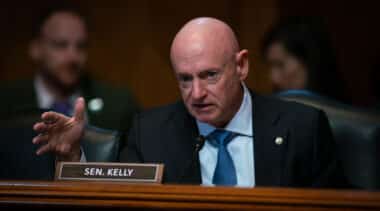
Democrats pivot on AI: Less regulation, more redistribution
The focus of Sen. Mark Kelly’s “AI for America” plan departs from other federal artificial intelligence policy proposals introduced by Democrats.
-
Investor-owned housing helps renters
It is not the infusion of capital from investors that disrupts housing markets; it is local government policies that do not let supply keep up with demand.
-
Reforming the TSA so airport security isn’t impacted by government shutdowns
Congress should remove TSA's conflict of interest as both the provider and regulator of airport security.
-
Only in America: Government shutdown causes air traffic control problems
It’s time for the U.S. to join the rest of the world in recognizing that governments should regulate safety but not run air traffic control.
-
New data model addresses Florida’s statewide housing supply shortages
The new Florida Housing Data Project is an interactive webpage providing housing data and analysis for the state and each of its counties.
-
Open enrollment is an important part of school choice for California
California’s current public school transfer laws are overly restrictive, complicated and in need of reform.
-
Sen. Ted Cruz proposes federal regulatory sandbox to encourage AI innovation, development
The SANDBOX Act would allow innovators to obtain temporary regulatory waivers for artificial intelligence technologies from federal agencies.
-
How Congress can spur the modernization of U.S. airports
Congress should enable airports to improve their performance and compete on a level playing field with airport public-private partnerships in Europe, Latin America, and Asia.