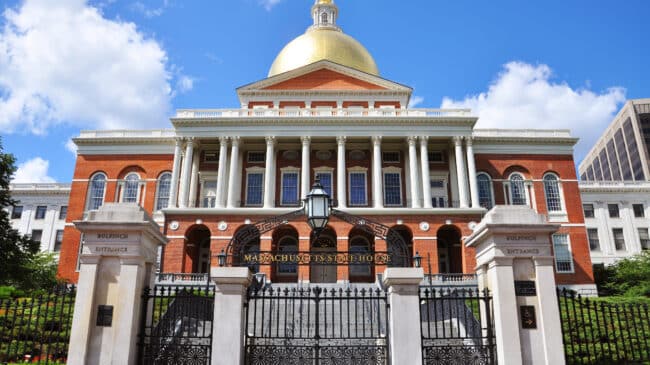

A version of this public comment was submitted to the Massachusetts Joint Committee on Mental Health, Substance Use, and Recovery on November 10, 2025.
States across the country are advancing legislation to safely expand access to psilocybin, with impressive results. Oregon and Colorado have implemented regulated psilocybin programs that include licensed service centers, product testing, and facilitator training. New Mexico just approved legislation to authorize limited medical psilocybin access for patients with qualifying conditions. Lawmakers in Arizona, California, Iowa, Illinois, New Jersey, New York, Missouri, and Washington continue to seriously consider multiple proposals for psilocybin regulation and access.
These efforts, like the proposals contained within Massachusetts H.2203 and H.4200, represent the growing movement from criminalization to sensible regulation grounded in public health and harm reduction.
Legislatures are acting for several key reasons:
- Mental health crisis: Conventional treatments are often costly, inaccessible, or ineffective for conditions like Post-Traumatic Stress Disorder (PTSD), depression, anxiety, addiction, and chronic pain.
- Strong safety and efficacy signals: Peer-reviewed research increasingly supports psilocybin’s potential therapeutic benefits.
- Public support: Decriminalization and safe access policies enjoy increasing bipartisan support.
- Policy innovation: With limited federal action, states are designing novel frameworks that balance access, safety, and oversight.
Promise of psychedelic-assisted therapy
Over the past decade, medical and scientific communities have increasingly recognized the potential of psychedelic therapies for the treatment of intractable mental health conditions. Clinical evidence suggests that certain psychedelic-based therapies are more effective than conventional treatments for various mental health disorders; current treatment options frequently have efficacy rates in the low teens. Earlier this year, the U.S. National Network of Depression Centers released a consensus statement calling for expansion into funding, research, and large-scale studies to explore the promise of psychedelic-assisted treatments.
The U.S. Food and Drug Administration (FDA) has granted psilocybin “breakthrough therapy” designation twice: first in 2018 for treatment-resistant depression, and again in 2019 for major depressive disorder. This status is specifically designed to expedite the regulatory review of drugs demonstrating substantial and superior treatment potential over existing options for serious, unmet medical conditions. As of 2025, two psychedelic substances—psilocybin and MDMA (for treatment of PTSD in 2017)—have already received breakthrough therapy designations. There are currently 14 active FDA Phase II or Phase III psilocybin clinical trials underway.
Psilocybin-assisted therapies have shown long-lasting favorable changes in well-being, attitude, and personality within only one- or two-session doses. Robust research suggests these therapies could treat a range of disorders, many with limited and/or largely ineffective treatment options—including anxiety in terminal illnesses, certain neurodegenerative diseases, obsessive compulsive disorder, and drug dependency—in addition to their FDA-recognized potential in treating depression.
A 2024 article in the academic journal Brain Sciences reviewed a dozen high-quality studies on the therapeutic effects of psilocybin administration, concluding: “A quantitative analysis of the studies indicates that psilocybin is highly effective in reducing depressive symptoms severity among patients with primary [major depressive disorder] or [treatment-resistant depression]. Both single-dose and two-dose psilocybin treatments significantly reduced depressive symptoms severity, with two-dose administration sometimes yielding more pronounced and lasting effects.”
Generally, psilocybin is said to have the best safety profile of any psychedelic substance. Psilocybin has low physiological toxicity, low risk of abuse or addiction, and no linked persistent harmful physiological or psychological effects during or after use, according to years of anecdotal data as well as modern scientific investigations. Psilocybin overdose is also exceedingly rare. A 2017 PubMed study found that, of 9,233 psilocybin users, only 19 (0.2%) reported seeking emergency medical treatment. They sought help mostly due to psychological symptoms (anxiety, paranoia), with poor ”mindset,“ poor ”setting,” and mixing substances as the most-reported reasons for incidents. All but one patient returned to normal within 24 hours, and all patients recovered within seven days.
A facilitated access model provides safety without costly overregulation
Both bills would establish a pilot program for facilitated therapeutic access to psilocybin. This approach blends regulated adult use with public health safeguards, allowing individuals to access psilocybin in a structured, informed environment that includes support, screening, and education, without requiring full clinical supervision. Ultimately, this model would avoid the cost barriers of a strictly medicalized system while creating accountability through licensed providers, required education, and robust tracking.
Conclusion
Clinical research of psilocybin and other psychedelic substances is a rapidly emerging field that is quickly changing the landscape of mental health across the country. States retain the authority to expand access to these substances through their own laws, with pioneers like Oregon, Colorado, and New Mexico responding to public health interests.
Embracing the promise of psychedelic therapies like psilocybin would place Massachusetts at the forefront of this new wave of evidence-informed reform. Recognizing the therapeutic value of new treatments will avoid the extremes of prohibition or unregulated use, instead offering a practical, public-health-based pathway to safe, equitable psilocybin access.