
Michelle Minton
Managing Director, Drug Policy, Reason Foundation
Michelle Minton is the managing director of drug policy at Reason Foundation.
With a focus on consumer policy issues, including gambling, alcohol, tobacco and nicotine, drug legalization, and health, Minton has authored numerous studies, including such topics as the effectiveness and unintended consequences of sin taxes, the history of gambling regulation, and the harmful consequences of drug war-style policies on public health outcomes.
Minton's analyses have been published and cited by nationally respected news outlets, including The New York Times, The Wall Street Journal, and USA Today, as well as peer-reviewed journals. She regularly appears in news media to discuss the unintended effects of laws and rules designed to save adults from their own choices, an approach that not only conflicts with the principles of individual liberty and bodily autonomy but often also the stated goals of public health policy.
Minton holds a Bachelor of Arts from Johns Hopkins University and a Master of Science from the University of New England.
-

The Drug Enforcement Administration’s arbitrary 7-OH ban is not rooted in science
In banning certain kratom-derived substances, the Drug Enforcement Administration ignores science.
-

After moves to protect medical marijuana, Trump asks Congress to save hemp
CBD and other hemp-derived products are at risk because of a November 2025 spending bill that Congress passed and Trump signed.
-

Trump’s medical marijuana rescheduling is historic—but many questions remain
The Trump administration has officially rescheduled state-licensed medical marijuana from Schedule I to Schedule III.
-

Ohio’s reckless kratom ban could create new public safety concerns and grow the illegal market
By banning nearly every kratom product, save for unprocessed leaf kratom, the state has functionally outlawed the entire consumer market.
-

State attorneys general ask Congress to undermine their state hemp laws
The most effective solution to the problem of unregulated hemp products is a workable regulatory framework, not prohibition.
-

The FDA’s plan to fast-track nicotine pouches is long overdue. But why aren’t vapes included?
The FDA should expand its accelerated pathway to include e-cigarettes, giving adult smokers a full range of safer alternatives.
-

How the One Big Beautiful Bill Act taxes gamblers on money they didn’t keep
When taxes make legal gambling punitive, players move underground—shrinking the legal industry, fueling illicit activity, and costing jobs and revenue.
-

Legal gambling enhances sports integrity—despite what critics claim
In the shadowy world of illegal gambling, where there is no legal oversight, corruption is harder to detect and easier to profit from.
-

Prisons selling vapes? Smart public health policy and a step toward autonomy behind bars
Making vape pens available in prison commissaries could improve inmate health and lower prisons’ healthcare expenses without increasing risk to the public.
-

Hemp in Texas: Regulation—not THC prohibition—is the sensible path forward
The upcoming special session gives Texas a chance to demonstrate how conservative states can responsibly regulate adult-use substances.
-

Why Gov. Greg Abbott should veto Texas Senate Bill 3
Senate Bill 3 would effectively dismantle the state's hemp industry, costing Texas millions in revenue and thousands of jobs.
-

New data shows no surge in problem gambling following sports betting expansion
A free, competitive, and well-monitored market is the best way to keep betting fair, safe, and aboveboard.
-

Texas Senate Bill 3 would harm the state’s hemp industry
Instead of outright prohibition, Texas legislators should develop a more balanced regulatory framework for hemp products.
-

Model legislation for optimal state regulation of hemp cannabinoids
Reason Foundation’s model legislation offers a clear and practical framework for states seeking to regulate adult-use hemp cannabinoids effectively.
-
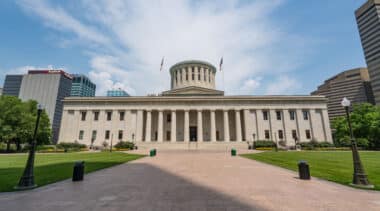
Intoxicating hemp products in Ohio need regulation, not prohibition
A prohibition on intoxicating hemp would be a step backward for Ohio, pushing demand underground and exposing consumers to risk and uncertainty.
-

Court ruling underscores the need for sensible hemp rules in New Jersey
Following a federal court ruling last month, the partial suspension of New Jersey’s recently adopted hemp law could be a golden opportunity for lawmakers.
-

Banning hemp products won’t protect public health or foster fairness for marijuana businesses
State lawmakers should aim for sensible regulations focused on consumer protection and transparency in both industries.
-

California’s emergency hemp rules could block access to life-saving therapies
California Gov. Gavin Newsom recently proposed emergency regulations to ban hemp products with 'any detectable quantity' of THC.