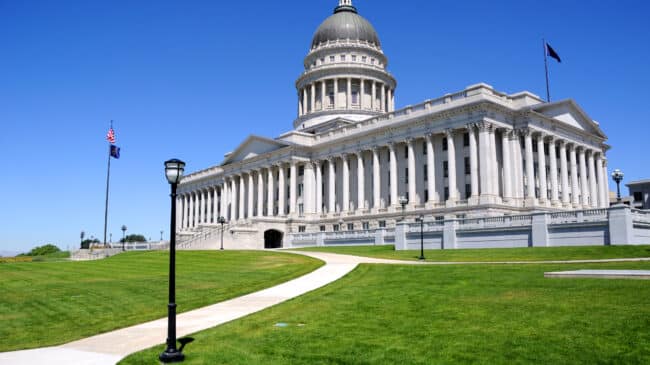

A version of the following public comment was submitted to the Utah House Education Committee on February 24, 2026.
Thank you for the opportunity to testify on House Bill (HB) 528.
Open enrollment laws can benefit students and school districts. They ensure students can attend public schools that are the right fit for their goals and needs, with many using these programs to enroll in A- or B-rated school districts, escape bullying, access Advanced Placement (A.P.) courses and specialized learning models, enjoy smaller class sizes, or shorten their family commutes.
A report from the nonpartisan California Legislative Analyst’s Office and a 2023 Reason Foundation study both found that the competitive effects of open enrollment also encourage public school districts to improve.
Research also shows that K–12 open enrollment is widely used and supported. Reason Foundation’s research published in Harvard University’s Education Next found 1.8 million students in 27 states and Washington, D.C., used this policy. Notably, 29% of Colorado students in public schools used open enrollment attend schools that are the right fit for them.
However, identifying open enrollment’s effects on families, taxpayers, and districts is only possible if detailed open enrollment data are available. Unfortunately, this is where Utah’s open enrollment law falls short.
HB 528 would remedy this by establishing an annual open enrollment report published by the state board of education, which would include district-level data, such as the number of transfers and denials. These data improve transparency and are key to understanding how districts implement their policies.
Statutes in 17 states, including Montana, Arizona, Nevada, and Idaho, require state agencies to publish some or all of the data as proposed in HB 528. Utah is unusual because, unlike other states with strong open enrollment laws, it doesn’t collect open enrollment data or publish it at the state level.
However, HB 528 can be further strengthened by including district-level data about why applicants were denied (masking data to protect students’ identities when necessary). As of 2025, five states report this data in their annual open enrollment reports, including Nevada, Arkansas, Oklahoma, Kansas, and Wisconsin.
Overall, HB 528 is an excellent addition to Utah’s law because it would significantly improve open enrollment transparency. In doing so, it would improve Utah’s grade on Reason Foundation’s annual scorecard from an “A-” to an “A.”