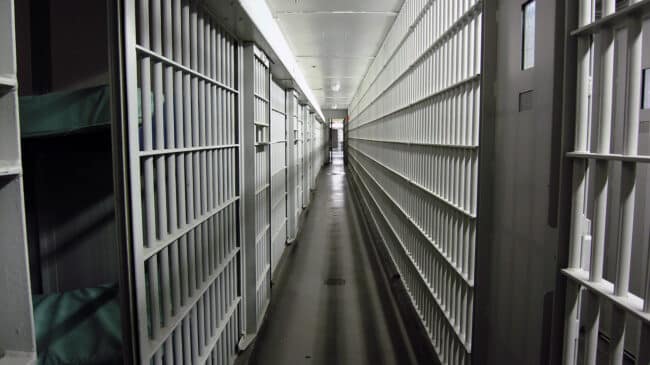

Since the late 1970s, the United States has been locking up more and more people in prisons for longer periods of time. In fact, according to the National Research Council, increased sentence length accounts for half of prison growth between 1980 and 2010. More than half of the people in prison are serving a sentence of a decade or longer, and one in seven are serving a life sentence.
But some long sentences, looked at years later in retrospect, don’t match with modern sentencing practices (think decades-old drug law prisoners) or otherwise don’t serve justice. Policymakers have turned to the concept of second-look laws to let judges review these old cases.
The growing body of second-look laws provides a judge-controlled review mechanism to safely reduce these kinds of old, lengthy sentences that may be out of step with current law, current sentencing strategies, or the interests of justice. The laws provide that individuals who have been incarcerated for a certain number of years—often 10, though versions of the legislation vary—receive a hearing in front of a judge (usually one who was not the sentencing judge) in which the judge considers any new evidence of good behavior and rehabilitation, changes in law, conditions of confinement as to that individual, or other factors that can convince the judge to resentence the person to a lower term.
Over the last several decades, sentences have exploded in length across the United States, fueled largely by drug sentences and the tough-on-crime politics of the ’80s and ’90s. Nearly one in five people in U.S. prisons—more than 260,000 people—had already served at least 10 years as of 2019. This is an increase from 133,000 people in 2000—which represented 10% of the prison population in that year.
By 2024, almost 200,000 people were serving life or virtual life sentences. According to the Council on Criminal Justice, long sentences (more than 10 years) in the states (based on data from 23 states) consist mostly of people convicted of a violent offense (56%), which include murders, sexual assaults, robberies, and other assaults; but it also includes 18% who were convicted for drug possession, distribution, and trafficking. Another 11% were sentenced to more than 10 years for “public order offenses” (defined to include firearms violations, habitual driving under the influence, nonviolent sex offenses such as prostitution, and disorderly conduct). This breakdown has remained stable since at least 2019, according to the study. Given that about 1% of the population commits 63% of all violent crimes, according to the National Library of Medicine, there must be a significant pool of people whose long-term incarceration is unnecessary for public safety.
But even as long sentences have left our prisons swollen with elderly and sick people and converted them into de facto mental health institutions, a large body of research has concluded that long sentences for many people make no sense at all and are actually costly and counterproductive.
First, long sentences are limited in achieving deterrence, one of the four goals of punishment, along with retribution, incapacitation (keeping dangerous people from the public for safety), and rehabilitation. While sentence length may have some deterrence effect, increasing already-long sentences produces diminishing returns. Evidence shows that, on the margin, deterrence is mostly a function of the certainty of punishment, not its severity. In other words, a typical thief is thinking less about whether he will be imprisoned for one year or three years, but more about whether he will get caught at all.
Second, lengthy sentences often exceed what is necessary to achieve the goal of incapacitation, considering that most people who commit crimes don’t persist in a criminal “career” for more than a few years. Evidence shows most people “age out” of crime, with criminal activity beginning to trail off after a peak at age 21. Though long-term incarceration may be justified for individuals who pose serious risks, housing many other elderly and infirm individuals who have already served long periods is a wasted expense. In 2013, the federal Bureau of Prisons spent about one in five dollars on housing and caring for prisoners over 50, and this population has grown since then as a proportion of all prisoners. All told, since 1990, the share of the imprisoned population over age 50 has quintupled to 15%.
On top of the data on age and likelihood of reoffense, there is growing evidence that the experience of being incarcerated itself, especially under poor and crowded conditions, is physically and mentally hazardous, even for the people who work in these settings. These harms compound over time and are worse for older people. Second look laws explicitly allow judges to take these facts into account when reviewing sentences. For example, during the pandemic, courts considered the likelihood of severe illness from COVID infection—greater in elderly people—when evaluating compassionate release motions. Under a second look law in a state, a judge could consider contemporary conditions in the facility of confinement when evaluating the appropriateness of a sentence reduction.
Second-look laws are already being used by 15 states, the District of Columbia, and the federal government. Many of the states (six) focus second-look policies on youth, in keeping with the history, as the first adopters of these laws were juvenile systems. The focus on young people grew out of the U.S. Supreme Court decisions in Graham v. Florida (2010) and Miller v. Alabama(2012), which ruled mandatory juvenile life without parole penalties unconstitutional for non-homicide crimes, and then all crimes.
Maryland’s newly minted second-look law is no exception. As Maryland Gov. Wes Moore has explained, Maryland’s Second Look Act builds on the state’s Juvenile Restoration Act of 2021, which banned life without parole for juveniles and provided people serving life without parole who had been sentenced as juveniles the opportunity to file a motion to review and reduce that sentence.
California, Illinois, Minnesota, Oregon, and Washington have each adopted resentencing programs that allow a prosecutor (and only a prosecutor) to initiate a petition for resentencing under their second-look statutes. These prosecutor-initiated programs are likely to miss many cases worth review because prosecutors are generally wary of questioning their prior cases. These statutes can be a healthy component of any state’s laws, because they allow second look reviews recognized as meritorious by the prosecution to be handled efficiently, but they don’t reach enough cases to successfully reduce unnecessary incarceration.
Other states, including California, Colorado, Oklahoma, and New York, allow judges to consider resentencing for specific groups of individuals who are military veterans (California), those sentenced under habitual offender laws (Colorado), and domestic violence survivors, respectively. The federal system allows resentencing under a provision often referred to as “compassionate release,” with a variety of qualifying factors, and D.C.’s compassionate release statute is based on age, in keeping with data showing the short spans of criminal careers.
When crafting legislation in this area, policy choices center around the time of eligibility, retroactivity, inclusion of mandatory/plea-bargained sentences, the interval people must wait before subsequent review after a denial, and whether the state will pay for attorneys for petitioners seeking to earn a reduced sentence.
New York, West Virginia, Vermont, and New Jersey are among the states considering new or expanded second look statutes this session.
A model bill from the National Association of Criminal Defense Lawyers allows a petition before the original sentencing judge, if available, after people have served 10 years; and then, if denied, after a successive two-year interval. The bill confers a right to counsel if the petitioner cannot afford one, and also provides that if the prosecutor agrees to the motion, the court “shall” grant the petition. The bill also provides a rebuttable presumption of approval for petitioners over 50 years of age.
Second-look laws offer a needed way to bring our justice system into alignment with both values and practical constraints. These second-look policies recognize that people change, laws evolve, and justice requires responsiveness as well as resolve. A sentence handed down decades ago should not be immune from review when it no longer serves any legitimate purpose but is costing the taxpayers greatly. By giving judges the authority to reassess sentences in light of time, growth, and changed circumstances, second-look provisions help restore balance and rationality to punishment—advancing public safety and fairness alike.