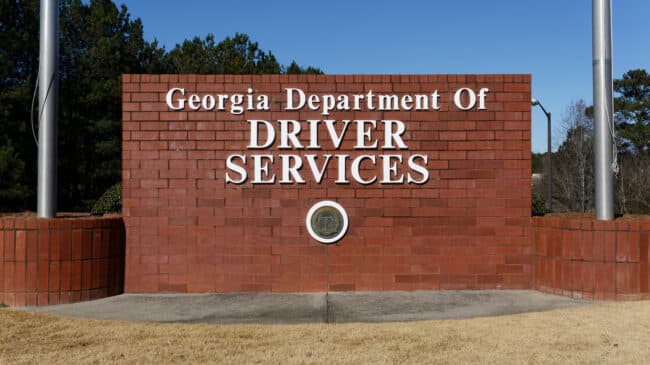


Georgia lawmakers passed House Bill 926, also known as the Second Chance Workforce Act, in 2024, making it easier for Georgians to restore their driving privileges if their licenses had been suspended due to a missed traffic court appearance. Unfortunately, the Georgia Department of Driver Services (DDS) has used its rulemaking authority to undermine that provision by erecting new procedural barriers for low-income drivers seeking to waive license restoration fees. DDS should rescind these restrictions. If it does not, the legislature should step in to ensure the law is implemented as written.
Having a driver’s license is often a necessary tool to rise out of poverty and unemployment. The vast majority of Georgians (75%) drive themselves to work, and many employers even require a valid driver’s license before hiring. Without a driver’s license, workers are at risk of losing their jobs and their income.
Georgia is one of 35 states where failure to appear at a traffic court date can result in a driver’s license suspension. Prior to the passage of HB 926, drivers were required to resolve the underlying case and pay a $100 reinstatement fee to DDS before having their driving privileges restored. Resolving the case could take weeks due to court backlogs and infrequent court dates in some parts of the state.
HB 926 streamlined the process by automatically reinstating licenses when a person contacts the court to reschedule a hearing. For residents too poor to pay the reinstatement fee, HB 926 also strengthened the state’s “pauper’s affidavit,” changing it from a 50% fee reduction to a full waiver. The legislature intended to ensure that the fee would not be a barrier to low-income Georgians who reengaged with the court.
When DDS amended its rules to account for HB 926, it did not simply update the rule to reflect the change from a 50% fee reduction to a full waiver. Instead, DDS’s amended rule introduced new restrictions that did not exist in the prior version of the rule and are not required by the statute. The old rule contained no limitation on how the pauper’s affidavit may be submitted. The new rule restricts mail submissions only to individuals who are either incarcerated or have a physical disability that prevents them from traveling to a DDS customer service center.
For people in rural parts of the state who may lack reliable transportation—the very population HB 926 aimed to help—this in-person requirement creates an additional barrier. Someone whose license is suspended because they missed a traffic court date and who cannot afford a $100 reinstatement fee is unlikely to have easy access to a DDS office.
Meanwhile, other problems with the old rule have carried over unchanged. DDS requires a 30-day waiting period after a reinstatement denial before reapplying. For someone who needs a valid license to get to work, a month-long delay after an incorrect or unjust denial can mean lost wages, lost employment, or the temptation to drive on a suspended license and risk criminal penalties.
DDS has not publicly explained why it added these restrictions. In its official synopsis of the rule change, the department simply stated that the amendment’s purpose was “to align with HB 926” and acknowledged in passing that the new provisions “add restrictions to the affidavit’s use.” DDS offered no justification for why a benefit the legislature had just expanded should be made harder to access.
The DDS commissioner has authority under the law to “promulgate such rules and regulations as are necessary to implement” the pauper’s affidavit provision. A regulation that instead erects new procedural barriers to a benefit the legislature just expanded is not faithful implementation.
DDS should eliminate the in-person submission requirement that did not exist in the prior rule and remove the 30-day reapplication ban not found in the statute. Should DDS continue to impose rules that contravene the legislature’s intent, further legislative action may be warranted.