


A newly-hired Montana public employee who neglects to select a retirement benefit in the first 12 months is currently set to automatically default into the Montana Public Employee Retirement System pension benefit (PERS-DB) during employment unless he or she chooses to join the defined contribution plan (PERS-DC). Given that only a fraction of public employees stay in their jobs for more than five years, much less for the 30 years required to receive a full pension benefit, Montana House Bill 226 aligns the default benefit option with what would best serve most public workers.
The PERS-DC Benefit Best Serves the Majority of Montana Workers
- When setting a default pension benefit in law, policymakers should make the decision that best serves the purpose of Montana’s retirement system—that is, it should maximize the retirement security of its members.
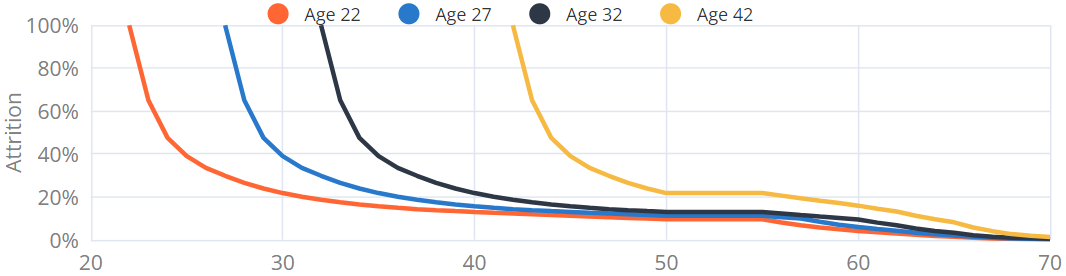
- Analysis of PERS retention data suggests two key findings: (1) most new hires leave public employment before ever vesting in the PERS-DB benefit, and (2) those who do work long enough to vest still tend to leave their jobs in the first 15 years, before any meaningful pension benefit can be accrued.

- Only 9% of Montana employees hired in their early 20s stay employed for the 30 years required to earn an unreduced PERS-DB retirement.
- Workers who default into the PERS-DB pension but leave public employment before a full career risk forfeiting employer contributions, falling behind on their retirement savings goals and potentially having to rely on public assistance in retirement.
The Power of Choice in Retirement Plans
- A one-size-fits-all retirement plan does not work for today’s workforce.
- Aligning the default benefit with the basic needs of workers while maintaining the current PERS-DB as an option allows for more portability and greater retirement security for the vast majority of employees hired by Montana governments, not just a very small group of full-career workers.
- With the option between the PERS-DC and the PERS-DB available to new workers, they can select the plan that best fits their expected career paths, maximizing the value of PERS to its individual members.
Bottom Line: The current policy only serves a fraction of public employees at an ever-rising cost. HB 226 sets the PERS-DC as the default to better align with the needs of the modern public workforce.