Jude Schwalbach
Senior Policy Analyst, Reason Foundation
Jude Schwalbach is a senior policy analyst at Reason Foundation.
Schwalbach previously worked at Heritage Foundation’s Center for Education Policy, where his research focused on expanding educational opportunities for K-12 students and reducing the federal footprint in education. Before joining Heritage, Schwalbach taught high school in Phoenix, Arizona.
Schwalbach’s writings have appeared in The Hill, National Review, RealClear Education, Orange County Register, Washington Times, and redefinED.
Schwalbach holds a B.A. in philosophy from Thomas Aquinas College and an M.A. in political philosophy from Hillsdale College.
He is based in Washington, D.C.
-

Funding Education Opportunity: Chronic absenteeism rates remain too high years after pandemic
Plus, school choice news from New Hampshire and North Carolina.
-
Improving Kentucky’s open enrollment program would help students and families
Strengthening Kentucky’s student-transfer policies would further empower families with the freedom to choose public schools.
-
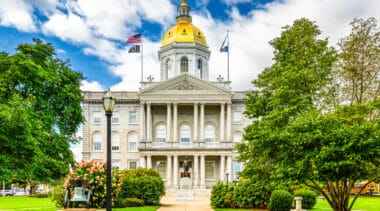
New Hampshire could become the 17th state to adopt a strong within-district open enrollment law
If codified, New Hampshire Senate Bill 97 would ensure that students could transfer to any public school with open seats within their school district.
-

Funding Education Opportunity: School districts slow to close schools despite losing students
Plus, school choice news, and the latest legal woes for Ohio and Wyoming’s private school scholarship programs.
-
Funding Education Opportunity: Study finds more than 1.6 million students using K-12 open enrollment in 19 states
Plus, Louisiana’s private school scholarship expansion fails, and Nevada policymakers strike a deal to expand public school choice.
-
Which K-12 finance systems foster school choice?
A look at education funding portability in five states and why it matters.
-
More states should expand school choice for public school students
Letting students attend whichever public schools are the best fit for them is a straightforward way to improve public schools and student outcomes.
-
Strengthening open enrollment laws is key to unlocking public school choice for kids
Examining how open enrollment law design impacts public school transfer opportunities.
-
K-12 open enrollment by the numbers: 2025
Approximately 1.6 million students across 19 states use some form of open enrollment or public school transfer law to attend schools that are the right fit.
-
Funding Education Opportunity: The Trump administration’s role in supporting school choice
Plus, new school choice laws impact hundreds of thousands of students in Texas, Arkansas, Indiana, and South Carolina.
-
Arkansas’ K-12 open enrollment slam dunk
Thanks to new open enrollment laws, Arkansas students can now attend any public school regardless of where they live.
-
Texas open enrollment bill would significantly increase school choice
Senate Bill 686 could help millions of students in Texas find the right public schools for them, regardless of their home zip code.
-
Funding Education Opportunity: Trump gutted the U.S. Department of Education—what this means for taxpayers and the public
Plus, Texas, Arkansas, New Hampshire, and North Dakota advance school choice proposals.
-
Missouri’s 2025 K-12 open enrollment proposals
Missouri is considering three open enrollment legislative proposals: Senate Bill 215, House Bill 711, and Senate Bill 572.
-
New Hampshire bill would improve open enrollment
New Hampshire House Bill 741-FN would make it easier for students to find a public school that best fits their needs.
-
Why open enrollment laws that let public schools reject transfer students aren’t good enough
Families and policymakers shouldn’t settle for open enrollment laws that allow public schools with open seats to reject transfer students.
-
Maine bill would improve open enrollment
Maine House Paper 375, Legislative Document 607 would make it easier for students to find a public school that best fits their needs.
-
Nevada Assembly Bill 533 would improve open enrollment
Adopting a robust open enrollment policy in Nevada would help ensure that public schools are available to all students.